Official Military Personnel File Photographs
(Service C or equivalent) Uploaded via Manpower Management Records and Performance (MMRP)/OMPF IAW MARADMIN 052/19 and MARADMIN 369/21.
Be Prepared
Please ensure your uniform is ready and serviceable before your appointment. It is your responsibility to ensure your uniform, badges, ribbons, devices and accessories meet or exceed your military service requirements, standards or instructions. Service members from other branches are encouraged to bring someone to look over uniform items.
Command Photographs
a. Materials. Three studio lights, one United States of America flag with tassel, one United States Marine Corps flag with tassel, one studio stool, a solid black background or neutral gradient, and one digital SLR camera. The Marine will be in his/her Service ―A‖, with ribbons and badges for the photograph. Exceptions will be made for: 8 th & I Marines who take a command photo in Dress Blues and deployed Marines may take a command photo with the uniform prescribe during their deployment.
b. Lighting. The 3:1 lighting ratio and the Rembrandt or 45 degree lighting style will be used on every command photograph. The main light will be to the left of the subject as viewed from the camera position. (1) In calculating a lighting ratio, the combined illumination from the main light and the fill light are compared against the illumination provided by the fill light alone. This ratio is expressed as two numbers, as in 3:1. The first number represents the combined strength of the main and fill lights, while the second number represents the fill light alone. (2) For Rembrandt or 45 degree lighting, the main light source is placed pointing toward the subject's face, at a 45 degree angle, slightly above the subject. The fill light is placed slightly lower on the same line as the main. A rear fill light can be used to lighten up the background and will be set at 1/4 power.
c. Flag Positioning (1) The American flag will naturally hang so that the stars of the flag face inboard to the subjects head and so it does not contact the Marine Corps flag. The red and white stripes on the flag should angle downward toward the subject and will be positioned on the photographer’s left side (see Figure 1-1 and Figure 1-2). (2) The Marine Corps flag will naturally hang so that the Eagle Globe and Anchor face upward with a slight angle inboard toward the subject. The flag will not come in contact with the United States flag and will be positioned on the photographer’s right side (see Figure 1-1 and Figure 1-2). (3) Depending on the width of the subject, the flags will be positioned to ensure equal spacing on each side of the subjects head (see Figure 1-1, Ex-A and Figure 1-2, Ex-A). The right shoulder of the subject should overlap the American flag so that there is not a gap between the subject and the edge of the American flag (see Figure 1-1, Ex-B). (4) The tassels will be positioned on their respective flag, staggered with the inner tassel positioned higher than the outer tassel. The upper tip of the outer tassel should fall half way down the inner tassel. The tassels will be parallel to the subjects’ ears and will not protrude out past the flags (see Figure 1-2, Ex-C).
d. All subjects will be centered in the photograph. Their body will be turned at a 45 degree angle to their right and head turned toward the camera (see Figure 1-1 and Figure 1-2). (1) Enlisted Marines will have half of their rank showing on their left arm and none of their rank showing on their right arm (see Figure 1-1, Ex-D). (2) Officers will have both lapels with rank insignia visible (see Figure 1-2, Ex-E).
e. The background will be solid black so when the back light flashes it will cause an even gradient on the background (see Figure 2-1 and Figure 1-2).
f. All photos will be cropped no less than one-half inches and no more than three-quarters of an inches above the subjects head (or cover) (see Figure 1-1, Ex-F and Figure 1-2, Ex-F). (1) The photo will be cropped eight by ten inches at 300 dpi. The left arm will be bisected vertically and be cropped above the third button of the Service Alpha uniform (see Figure 1-1 and Figure 1-2). (2) Enlisted Marines will be cropped to ensure that their rank is bisected vertically (see Figure 1-1, Ex-D).
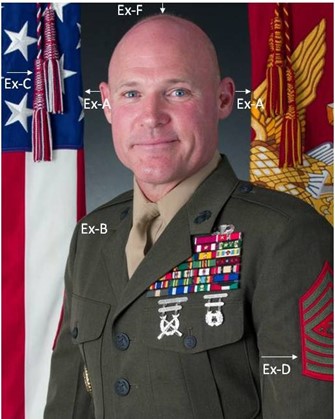
Figure 1-1.--Command Board Photograph (enlisted)
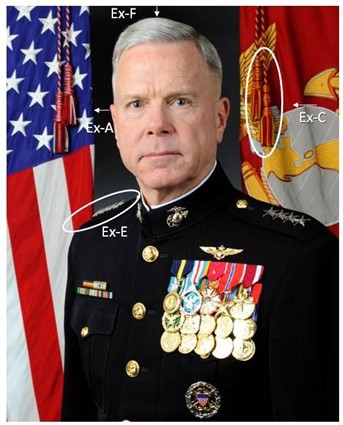
Figure 1-2.--Command Board Photograph (officer)
Promotion Photographs
a. The 1-1 lighting ratio will be used on every promotion photo. The main light and fill light are the same intensity in order to avoid background shadows.
b. All photos will be cropped no less than one-eighth inch and no more than one-quarter inch above the subjects head and feet (Figure 1-3, EX-H). The photo will be cropped at four by five inches at 200 dpi.
c. The subject will be positioned at a 45 degree angle, three quarter view with their left shoulder forward standing at the position of attention in the prescribed uniform (garrison or deployed). The subject’s head and eyes are level and looking at the camera (Figure 1-3).
d. Digital Title Board. White lettering will be used on the promotion board. The font will be Times New Roman, Bold, and will not exceed 8.5. **Note: In order to fit all required info on the board per reference (m) the font size may be adjusted smaller.
e. The board dimensions will be one and one-half inch by one and one-quarter inches (1 1/2‖ x 1 1/4‖) at 200 dpi and will be positioned so that the bottom edge of the board is level with the subjects left foot and one and one-half inch (1 1/2‖) from the subjects left leg. The following lines will be included on the title board, without exception and no information will be excluded per reference (k): (1) First line: Marine's last name, first name, middle initial(s). (2) Second line: rank, primary MOS. (3) Third line: last four of the SSN, proceeded by 5 x's (xxxxx1234). (4) Fourth line: height in inches and weight in pounds separated by a slash, body fat percentage if Marine exceeds height and weight standards. For pregnant Marines, "preg" vice the Marine's weight. (5) Fifth line: abbreviated billet assignment description and unit. For IRR Marines, the billet assignment and unit will be MOBCOM. (6) Sixth line: date photograph was taken (yyyymmdd). (7) Seventh line: Height and weight certification by the senior leadership (CO/XO SgtMaj or 1ST Sgt) of the command is required regardless of rank and body fat percentage. ―Certified by (name of CO/XO SgtMaj or 1ST Sgt, command title)‖, example: Col I M Smith, CO, HQBN, HQMC. Individual ready reserve (IRR) Marines are not required to have their height and weight certified. IRR Marines that have their official photo taken must put "IRR Marine" in place of the certifying official.
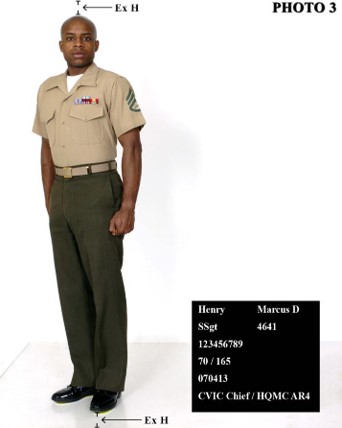
Figure 1-3.--Promotion Board Photograph Standards
Iso-Prep Photographs
a. Position the subject in front of any plain background. Two photos should be taken, one of the subject straight on, and the second will be a left profile shot (see Figure 1-4). b. The file should be cropped at two inches by two inches (2‖ x 2‖), 200 dpi and should only show the subjects face and neck.
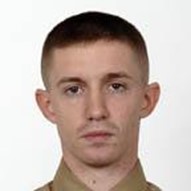
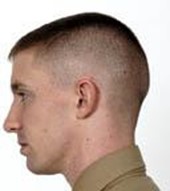
Figure 1-4.--ISO-PREP Photograph Standards
Official Photographs
Official photographs are any other photograph required for official use to identify positions of leadership, authority or billet that are not command specific. Lighting, background, cropping and the positioning of the American flag will all be the same as a command photograph. The only difference is the absence of the Marine Corps Flag.
a. Materials. Three studio lights, one United States of America flag with tassel, one stool, a solid black background, and one camera. The Marine will be in his/her Service ―A‖, with ribbons and badges for the photograph. Civilian employees that require an official photograph will be in proper business attire.
b. Subject Positioning Uniform service members will follow the same positioning as the command photographs. Civilians will be positioned the same as officers, slightly turned to their right.